Seattle
SEA
Seattle-Tacoma International Airport

United States
Departures


Arrivals

Seattle-Tacoma International Airport
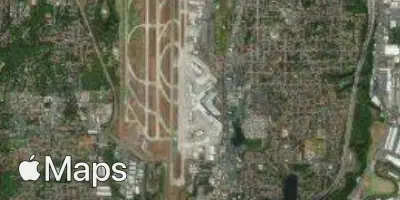
Seattle-Tacoma International Airport (SEA) serves Seattle, United States, and lies roughly 14 miles from the city center. The airport sits at an elevation of 429 feet above sea level.
Traffic through SEA reflects a strong mix of domestic and international connectivity. Departures reach across the United States, from the East Coast to central hub cities, alongside routes to Hawaiian destinations that link the mainland with the Pacific. Beyond North America, the airport supports long-haul international service to Europe and East Asia, positioning it as a gateway between the Pacific Northwest and destinations across the Atlantic and Pacific. Arrivals mirror this pattern, drawing flights from major hubs across the country as well as island destinations in the Pacific, underscoring the airport's role in both short-haul domestic travel and longer transcontinental and transoceanic connections.
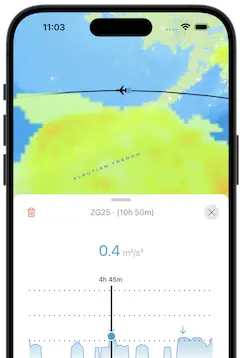
This combination of domestic reach and intercontinental service means travelers moving through SEA can expect a wide range of flight durations and conditions, from short regional hops to lengthy overwater and transpolar-adjacent routes. The airport's function as a link between the western United States, Hawaii, Europe, and East Asia gives it a broad operational footprint. For travelers checking turbulence forecasts, this diversity of route types and distances is a relevant factor, since flight paths vary considerably in length, direction, and the atmospheric regions they cross.
Height above sea level
429 ft
Distance to city
14 miles
Traffic volume
351 flight per day
Satellite